Groundhog Day: Hedonism, Nihilism, and the Question of How to Live
Groundhog Day isn’t just a comedy about repetition - it’s a film that explores hedonism, nihilism, and the possibility of living well. Join us at the Filmhouse as Film & Philosophy opens its new season with a screening and discussion asking: could a life lived well be worth repeating?
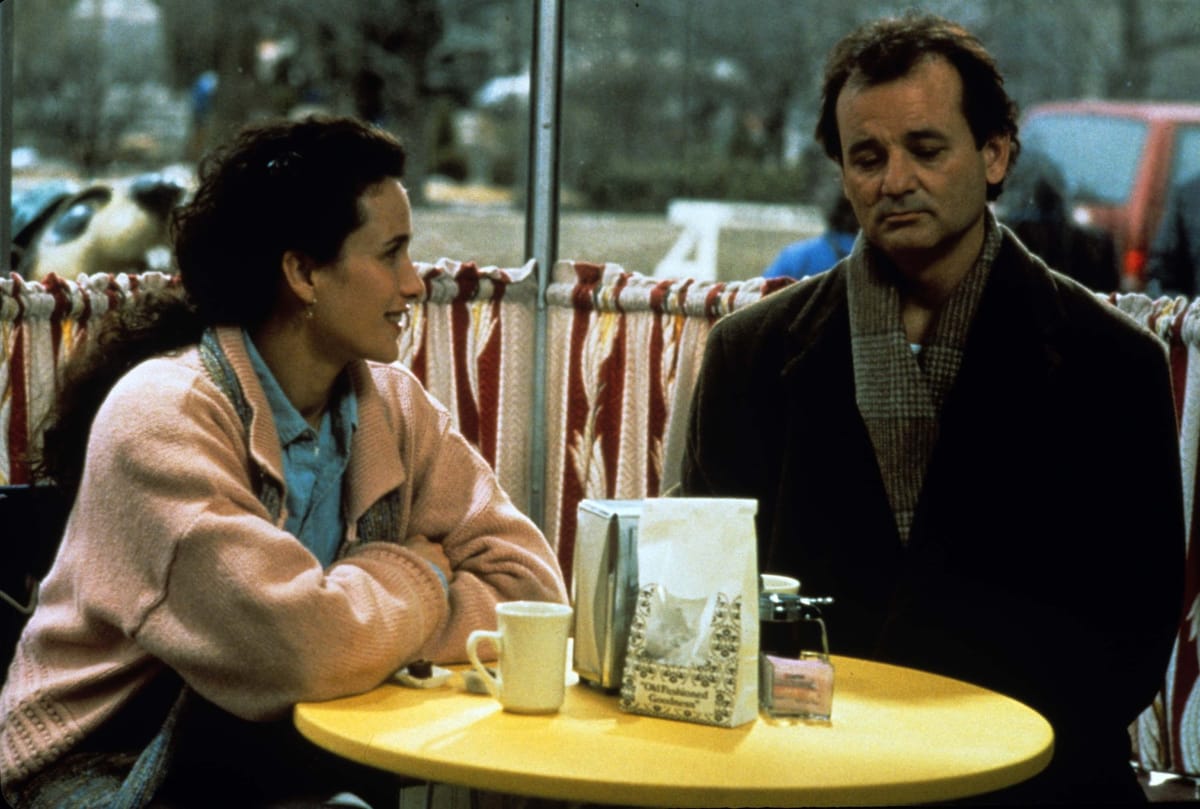
In Groundhog Day, Phil Connors wakes up to find himself trapped in the same day, over and over again. No matter what he does, the clock resets. Nothing carries forward. At first, this seems like a problem to solve. Then it becomes something stranger: a test of how to live when progress disappears.
What makes Groundhog Day so philosophically rich is that it doesn’t jump straight to answers. Instead, it lets Phil move through a series of recognisable responses - each of which maps onto long-standing philosophical positions.
Hedonism: pleasure without consequence
Phil’s first response is hedonism: the idea that the good life is one devoted to pleasure and the avoidance of pain. If nothing has lasting consequences, why not indulge?
Eating, drinking, sex, impulse, excess - all become risk-free. And yet, the film is remarkably clear-eyed about how quickly this collapses. Pleasure, endlessly repeated, loses its power. Enjoyment turns thin, then tedious.
The question the film raises is not whether pleasure matters, but whether it can sustain a life on its own.
Nihilism: nothing matters anyway
When pleasure fails, Phil falls into nihilism - the view that life has no meaning, value, or purpose. If nothing changes, and nothing counts, why care at all?
This is the film’s bleakest phase. Phil withdraws, gives up, and repeatedly confronts the idea that existence itself might be pointless. Importantly, Groundhog Day doesn’t caricature this stance. It allows nihilism to feel persuasive - even rational - under the conditions Phil faces.
But it also shows its cost.
Repetition as a way of living well
What follows is neither indulgence nor despair, but something quieter. Phil remains trapped in repetition, yet begins to act differently within it. He practices skills. He pays attention to others. He does things well, even when no future reward is guaranteed.
Here the film resonates with several major philosophical ideas:
- Aristotle argued that a good life isn’t about maximising pleasure or avoiding despair, but about cultivating virtues through repeated action - becoming a certain kind of person over time.
- Friedrich Nietzsche posed the challenge of eternal return: could you affirm your life if you had to live it again and again, exactly as it is?
- Albert Camus, in The Myth of Sisyphus, suggested that meaning might not come from escape or resolution, but from how we inhabit an absurd, repetitive condition.
Groundhog Day never announces these frameworks - but it stages them with remarkable clarity.
Questions to bring to the screening
As part of Film & Philosophy: The Cinema of the Self, this screening invites us to watch Groundhog Day as more than a comedy, and to use it as a way of thinking about identity, repetition, and value.
You might want to bring these questions with you:
- Why does hedonism fail so quickly in a world without consequences?
- Is nihilism a reasonable response to repetition - or a failure to see other forms of meaning?
- What kinds of actions remain worthwhile even if nothing “progresses”?
- Does Phil escape the loop because he changes the world, or because he changes himself?
- Could a life lived well be worth repeating?
After the film, we’ll explore these ideas together in an open, informal discussion. Philosophical experience is welcome but not required - the film itself does most of the work.
🎟️ Tickets are available now.
Join us at the Filmhouse on 2 February 2026 (yes, that is actually Groundhog Day!) for a screening that treats Groundhog Day not just as a classic comedy, but as a serious - and surprisingly generous - meditation on how to live.