Introduction to Film Studies 1: The Critical Faculty
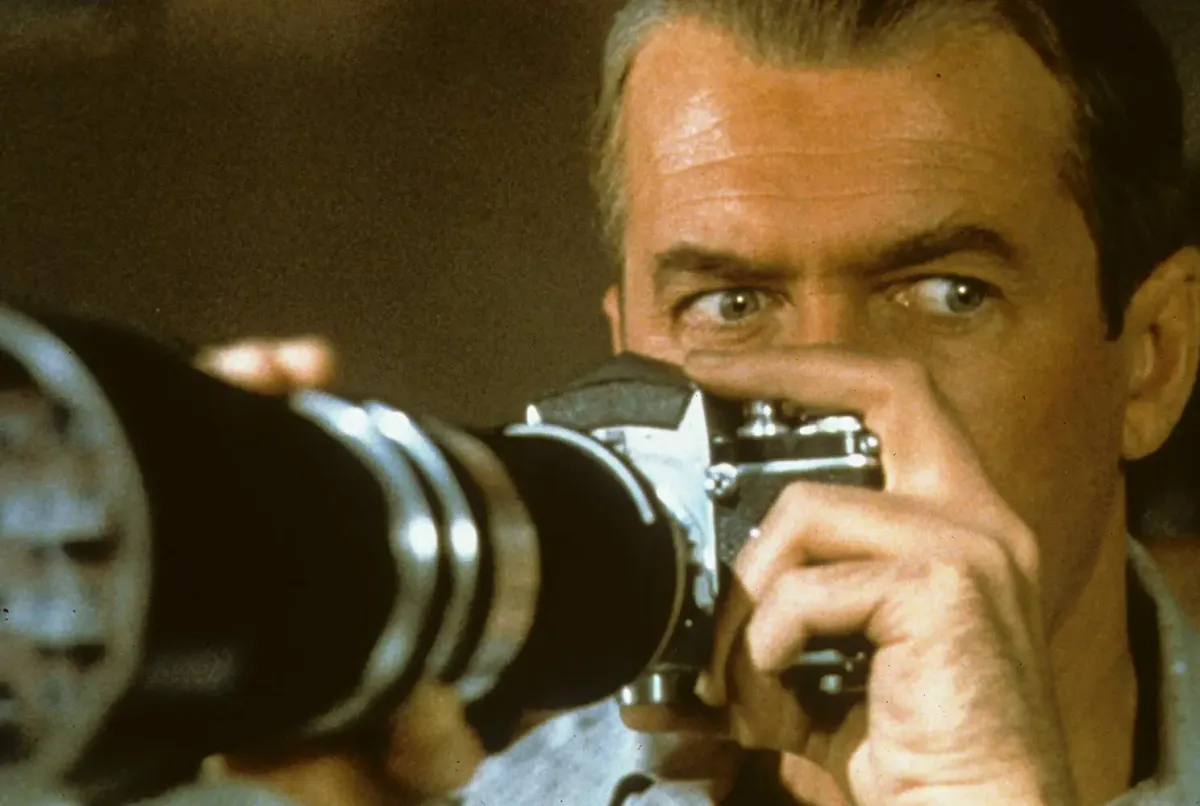
Introduction to Film Studies Lesson 1: The Critical Faculty
Part of the Introduction to Film Studies course.
Course Syllabus | Next Lesson ➡️
From Consumption to Critique
Introduction: The Trap of "I Liked It"
We all start as fans.
We go to the cinema to escape, to feel, and to be entertained. We let the darkness of the theater wash over us, surrendering our senses to the giant screen. When the lights come up, we turn to our friends and say, "I liked it," or "I was bored," or "That was scary."
This is Consumption. It is a valid way to experience a movie - it is how 99% of the world watches film - but it is not Film Studies.
To study film is to move from consumption to Critique. It requires you to install a mental switch - what we call the Critical Faculty. When you flip this switch, you stop asking "Did I like this?" and start asking "How does this work?" You stop being a passenger on the train, enjoying the view, and you become the mechanic, listening to the engine.
The Critical Faculty is the ability to distance yourself from your own emotions and analyze the machine that produced them. It is the realization that the fear you felt in a horror movie was not an accident; it was the calculated result of a low-frequency sound mix, a specific color palette, and a rhythm of editing designed to manipulate your heart rate.
1. The Core Distinction: Form vs. Content
The first step in this transformation is learning to distinguish between two opposing forces: Content and Form.
Most casual viewers only see Content. Content is the "What." It is the plot, the characters, and the dialogue. If you ask a friend what Star Wars is about, they will tell you the Content: "It’s about a farm boy who joins a rebellion to fight an evil empire."
But the Film Student looks at the Form. Form is the "How." It is the style, the structure, and the techniques used to present the content.
- The Content is the farm boy looking at the sunset.
- The Form is the use of a wide-angle lens to make him look small, the swelling orchestral music to suggest longing, and the warm color grading to create a sense of hope.
The same story (Content) can be told in a thousand different ways (Form). A break-up scene could be filmed as a tragedy (with rain, violins, and close-ups) or as a comedy (with bright lighting, wide shots, and a pratfall).
As the French New Wave critic Jean-Luc Godard famously said: "Tracking shots are a question of morality."
This is a confusing quote until you apply the Critical Faculty. Godard meant that how you film a subject is an ethical choice. If you film a war scene with shaky, handheld cameras (like Saving Private Ryan), you are choosing to show war as chaotic and terrifying. If you film the same war scene with smooth, heroic, slow-motion shots (like 300), you are choosing to show war as glorious and rewarding. The content (men fighting) is the same, but the form changes the meaning entirely.
2. The Invisible Language
Cinema is often described as a "universal language," but it is actually a very specific, learned grammar. When you watch a film without knowing this grammar, you are functionally illiterate. You understand the "gist" of the story, but you miss the poetry, the subtext, and the deeper arguments.
We break this language down into three structural units:
- The Shot: This is the basic word. It is a single, uninterrupted run of the camera.
- The Scene: This is the sentence. It is a series of shots joined together that take place in one location and time.
- The Sequence: This is the paragraph. It is a series of scenes that form a distinct narrative unit (e.g., "The Chase Sequence" or "The Training Montage").
Directors use this grammar to speak to your subconscious. Consider the "Dutch Angle" (tilting the camera to the side so the horizon is not level). In real life, the world is never tilted. So, when a director uses a Dutch Angle, they are bypassing your conscious brain and signaling directly to your primitive instincts that something is wrong. In a spy movie like Mission: Impossible, this creates excitement. In a psychological thriller like The Third Man, it creates moral confusion. The director is speaking to you, but unless you know the language, you don't realize you are being spoken to.
3. The Magician and the Trick
Imagine you are watching a magician perform a card trick. The first time you see it, you are amazed. You believe in magic. This is the "Fan" perspective.
Now, imagine the magician shows you how the trick is done. He shows you the hidden pocket, the marked card, and the false shuffle. The next time you watch the trick, you are no longer "amazed" in the same way. The mystery is gone. But it is replaced by a deeper appreciation for the skill. You can now admire the dexterity of his fingers and the psychology of his distraction. This is the "Critic" perspective.
In this course, we are going to provide insight into the mechanics and meaning behind the magic of cinema. We are going to show you the hidden pockets.
In the first half of the course, we dismantle the machine to understand how the moving image is constructed.
- Lesson 1: The Critical Faculty
- Moving from passive consumption ("I liked it") to active critique ("How does it work?").
- Distinguishing between Content (What) and Form (How).
- The "Invisible Language" of cinema.
- Lesson 2: Narrative Structure
- The distinction between Story (chronological events) and Plot (what we see on screen).
- How directors manipulate Time (Order, Duration, Frequency).
- Range of Knowledge: Suspense (Omniscient) vs. Mystery (Restricted).
- Lesson 3: The Principles of Form
- Viewing the film as a closed system.
- Analyzing Function and Motivation (Why is this here?).
- Identifying Motifs, Parallels, and Repetition.
- Lesson 4: Mise-en-scène
- "Putting into the scene": The psychology of the environment.
- Analyzing Setting, Props, Costume, and Makeup.
- The power of Lighting (High Key vs. Low Key/Chiaroscuro).
- Lesson 5: Cinematography
- The camera as a narrator.
- Framing (Long Shot vs. Close-up) and Angles (High vs. Low).
- Camera Movement (Tracking, Pan, Steadicam) and Focus (Depth of Field).
- Lesson 6: Editing
- The "Third Meaning" created by joining two shots.
- The Kuleshov Effect.
- Continuity Editing (Invisible) vs. Montage (Visible).
- Lesson 7: Sound
- The invisible narrative: Dialogue, Effects, and Music.
- Diegetic (in the world) vs. Non-Diegetic (outside the world) sound.
- Fidelity and the psychological use of silence.
In the second half, we move beyond the technical to the philosophical, asking not just how the machine works, but what it is for.
- Lesson 8: Auteur Theory
- The question of authorship: Is the director the sole "author" of a film?
- The history of Cahiers du Cinéma.
- Identifying a director's visual signature and worldview.
- Lesson 9: Realism vs. Formalism
- The central philosophical debate: Is the camera a window (Lumière) or a frame (Méliès)?
- The ethics of the Long Take vs. the manipulation of Montage.
- From Italian Neorealism to the digital Hyperreal.
- Lesson 10: Documentary
- "The creative treatment of actuality."
- The Modes of Documentary: Expository, Observational, Poetic, and Participatory.
- The ethics of filming real subjects and the blur of "Docufiction."
- Lesson 11: Genre
- The psychological contract between filmmaker and audience.
- Iconography and visual shorthand.
- The Life Cycle: Primitive ➡️ Classical ➡️ Revisionist ➡️ Parodic.
- Lesson 12: Ideology and Representation
- Cinema as a political text.
- Explicit vs. Implicit Ideology.
- The gaze, stereotypes, and the concept of Cultural Hegemony.
- Lesson 13: Synthesis
- Combining Form and Function to read the screen.
- The transition from Film Studies to Philosophy.
- Final analysis: Reading the film as a total work of art (Gesamtkunstwerk)
The Philosophical Horizon: Plato’s Cave
Why do we do this? Why is it important to analyze movies? Is it just to win at dinner parties?
No. We do this because cinema is the most powerful tool for shaping reality ever invented.
2,400 years ago, the philosopher Plato described an allegory called The Cave. He imagined a group of prisoners chained in a dark cave, facing a blank wall. Behind them was a fire, and puppeteers walked in front of the fire, casting shadows on the wall. The prisoners watched these shadows their entire lives. They believed the shadows were reality. They gave the shadows names; they feared them; they loved them.
Plato argued that the philosopher is the one who breaks the chains, turns around, and sees the fire. He realizes that the shadows are just illusions.
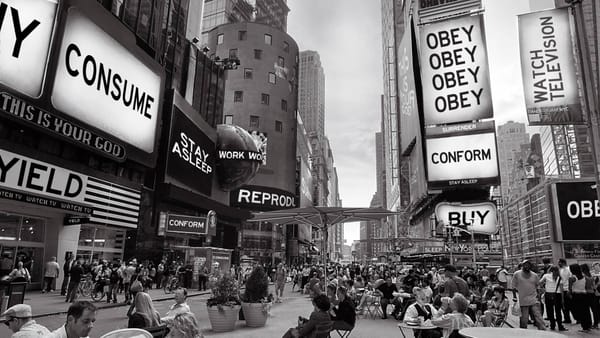
Today, we are the prisoners in the cave. We spend our lives staring at screens -cinema screens, television screens, phone screens. These screens project shadows that tell us what the world is like. They tell us who to love, who to hate, what is beautiful, and what is just.
If you cannot analyze the screen - if you cannot see the Form, the Editing, the Lighting, and the Ideology - you are a prisoner. You are passive. You believe the shadow is the truth.
But if you can analyze the screen - if you can flip that "Critical Faculty" switch - you are free. You can see the puppeteer. You can understand that the movie is not "reality," but a constructed argument about reality.
Welcome to Film Studies. Let’s turn around and look at the fire.
The Seminar Room
Join the discussion below. (Note: You must be a logged-in member to comment.)
Today's Prompt: The First Memory
- The Film: What was the first movie that made you realize cinema was "Art" and not just entertainment?
- The Moment: Was there a specific shot, sound, or scene that stuck in your head?
- The Why: Looking back now, using your "Critical Faculty," why did that moment affect you? Was it the music? The camera angle? The silence?
Continue the course
➡️ Next lesson: Narrative Structure
Discussion
Use the comments below to ask questions, raise objections, or test ideas from this lesson.
Course Overview and Syllabus | Next Lesson ➡️