Introduction to Film Studies 13: Synthesis
Synthesis is the realization that cinema is a Gesamtkunstwerk - a "total work of art" where every element operates in simultaneous harmony.
Introduction to Film Studies Lesson 13: Synthesis
Part of the Introduction to Film Studies course.
⬅️Previous Lesson | Course Syllabus | The Curriculum
Reading the Screen
Introduction: The Active Spectator
Congratulations. You have stripped the engine down.
Ten lessons ago, we began this course with the concept of the Critical Faculty – the mental switch that moves you from a passive consumer of entertainment to an active reader of texts. Over the last few weeks, you have acquired the vocabulary of the mechanic. You no longer just see a "sad scene"; you see the use of blue filters and minor-key music. You no longer just see a "hero"; you see a low-angle shot designed to manipulate your perception of power. You have learned to see the invisible walls of the narrative and the hidden cuts of the editor.
But knowing the names of the tools is not the same as knowing how to build a house. A student who can merely point at a screen and shout "Dutch Angle!" or "Diegetic Sound!" is not a critic; they are a cataloger. The final step in this introductory course is Synthesis.
Synthesis is the art of weaving these isolated observations - lighting, sound, editing, narrative, genre - into a coherent argument. It is the moment where you stop listing what is on the screen and start explaining why it matters. It is the realization that cinema is a Gesamtkunstwerk - a "total work of art" where every element operates in simultaneous harmony.
The Formula for Meaning: Form + Function
When discussing a film - whether in an academic essay, a review, or a conversation - the most common trap is to fall back into retelling the plot. We all know the plot. The plot is merely the skeleton; your job as a critic is to describe the flesh and the soul.
A strong critical analysis relies on a simple equation: Form + Function = Meaning.
You must connect the technical choice (Form) to the narrative or emotional result (Function).
Consider a practical example from Francis Ford Coppola’s The Godfather. A weak analysis might simply say: "Michael Corleone becomes a bad guy at the end." This is true, but it is boring. It is merely descriptive.
A synthesized analysis looks deeper, connecting the disciplines we have studied: "Coppola externalizes Michael’s moral decay through the gradual suffocation of light (Mise-en-scène). In the opening wedding scene, Michael is bathed in the soft, high-key fill light of the outdoors—he is a civilian, transparent and open. However, as he descends into the family business, the lighting changes. By the final reel, he is silhouetted in heavy chiaroscuro shadows (Cinematography), his eyes hidden from the viewer. This visual darkness is reinforced by the door closing in the final shot (Motif), which physically shuts out his wife and, by extension, the audience. The form tells us he has lost his humanity long before the script confirms it."
In this analysis, we aren't just watching the story; we are reading the language of the film. We are seeing how the lighting (Lesson 4), the camera angles (Lesson 5), and the motifs (Lesson 3) work in unison to create the meaning.
The Limits of Film Studies
However, there is a limit to what "Film Studies" can teach us. We have spent this course asking "How?"
- How does the editor create suspense?
- How does the lens dictate reality?
- How does the genre reflect society?
But knowing how the machine works does not tell us what the machine is for. This brings us to the edge of the discipline and the beginning of Philosophy.
Cinema is not just a technical exercise; it is an ethical and ontological one.
- We know how editing manipulates emotion... but is it ethical to manipulate an audience? (The Propaganda Question).
- We know how the camera captures reality... but what is reality? (The Ontology Question).
- We know how cinema constructs a view of the world... but does that view corrupt us or enlighten us? (The Moral Question).
These are not questions that can be answered by checking the focal length of a lens. They require us to step back from the screen and engage with the history of human thought.
The Thinking Eye
This brings us to the end of Introduction to Film Studies, but it is only the beginning of your journey here.
You have built the foundation for seeing. You understand the grammar of the medium. But to truly engage with cinema as a philosophical tool, you also need the foundation for thinking.
That is why our curriculum is two-fold.
- Introduction to Philosophy: In this upcoming companion course, we will explore the "Big Questions" that have haunted humanity for millennia. We will study Plato, Descartes, Nietzsche, and Beauvoir. We will learn the vocabulary of logic, ethics, and metaphysics.
- Philosophy and Film: Finally, we will bring these two worlds together. We will use your new film knowledge to dissect your new philosophical knowledge.
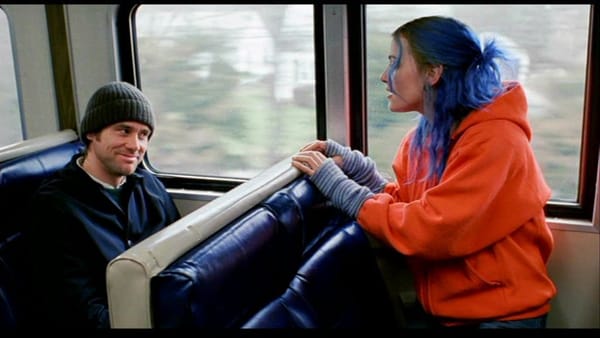
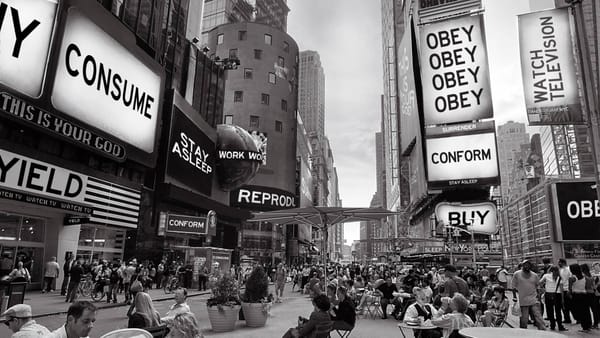
We will watch The Matrix not just to critique its CGI, but to debate René Descartes and the nature of the simulated mind. We will watch Eternal Sunshine of the Spotless Mind to understand Nietzsche’s concept of Eternal Recurrence. We will watch Blade Runner to ask what it means to be human.
You have learned to watch. Now, get ready to learn to think.
The Seminar Room
Join the discussion below. (Note: You must be a logged-in member to comment.)
Final Prompt: The Graduation
- The Return: Go back to the very first film you thought of in Lesson 1—the movie that made you love cinema.
- The Shift: Watch a single scene from it again today.
- The Synthesis: Write a short paragraph (3-4 sentences) analyzing it. Do not tell us the plot. Tell us how the Lighting, Sound, or Editing creates the feeling of the scene.
Continue your learning journey
➡️ Introduction to Philosophy (coming Soon)
➡️ Philosophy of Film (coming Soon)
Discussion
Use the comments below to ask questions, raise objections, or test ideas from this lesson.