The Fabulously Found: Amélie and the Architecture of Enchantment
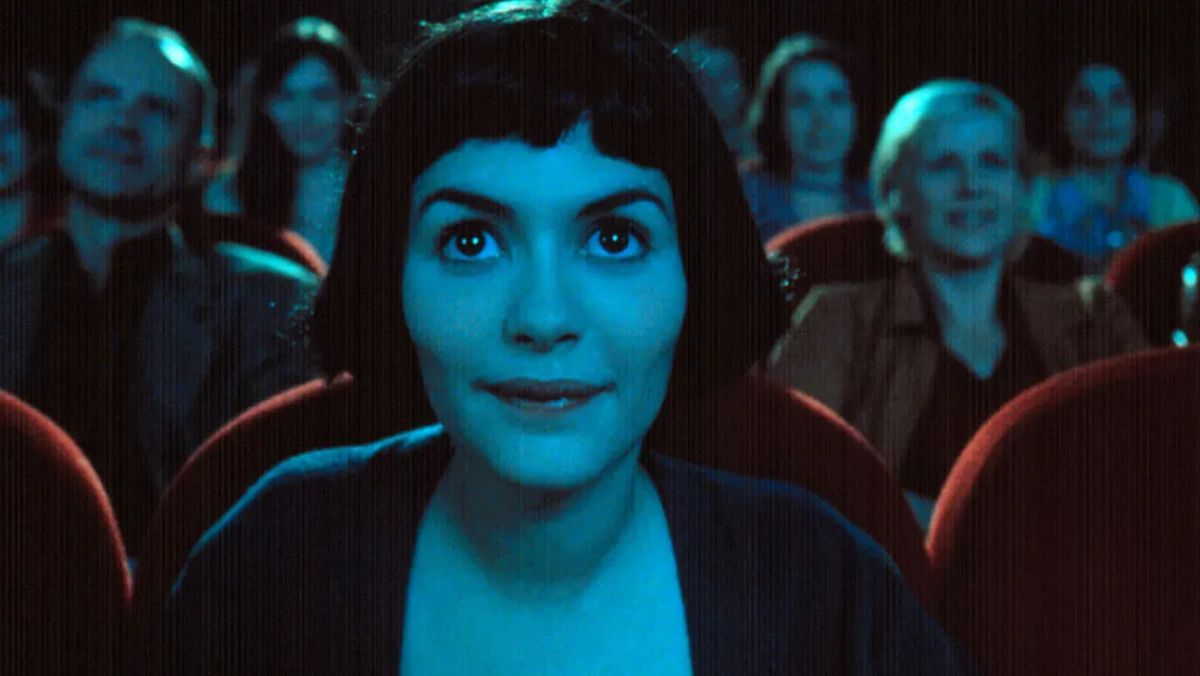
To appreciate the real beauty of Le Fabuleux Destin d'Amélie Poulain on its 25th anniversary (yes, it has been quarter of a century!), we must look beyond the surface of its sepia-toned charm. At the intersection of the Phenomenology of Love and the Philosophy of World-Making, Amélie reveals itself not merely as a quirky romantic comedy, but as a profound meditation on how we inhabit reality and, crucially, how we transform it.

The Phenomenology of the Fragment
In the philosophical tradition of Maurice Merleau-Ponty, the body is our primary means of "being-in-the-world". Amélie Poulain begins her journey in a state of isolation, a tactician of the mundane who interacts with objects to anchor herself in existence. Dipping her hand into sacks of grain or cracking the crust of a crème brûlée are intentional acts of "embodiment" in a world that feels otherwise distant and untouchable.
In its treatment of love, the film avoids the hollow clichés of instant soulmates. Instead, it presents love as a shared phenomenology. Amélie and Nino do not fall in love through dialogue, but rather through a mutual collection of the world’s "fragments": discarded photo-booth portraits, mysterious footsteps, and hidden messages. Their connection is built on the way they perceive the world. To love someone, the film suggests, is to finally find the person who notices the same "invisible" details you do. Love is the bridge between two private phenomenological worlds.
From Mimesis to Poiesis: the act of creation
However, the film’s genius lies in the realisation that it does not just represent cultural norms of love; it creates a landscape for us to re-imagine what they might be. In film theory, we often move from mimesis (imitation) toward poiesis (the creation of a world). What did Amélie actually create?
- Montmartre Reborn: Jean-Pierre Jeunet did not merely document Montmartre; he performed an act of hyper-reality. By digitally purging graffiti, polishing the cobblestones, and saturating the palette with impossible golds and greens, the film moved from observation to construction. It transformed the grit of 21st-century Paris into a tactile Utopia where the "reel" world permanently overrode the "real" world, creating a pilgrimage site for those seeking enchantment.
- The Aestheticisation of Loneliness: Before 2001, cinematic loneliness was often a void. Jeunet created a world where loneliness is a vibrant and generative act, turning the solitary observer into a "secret architect" whose internal richness eventually leaks out to reshape the city.
- A New Norm of Aspirational Love: Beyond aesthetics, the film created a new aspiration to find a love that is playful, curious, and the result of real endeavour. In a world of easy swipes and digital ghosting, Amélie offers a possibility of love as a series of riddles and gifts - a fabulously found intimacy that requires one to truly look at the other. It invites us to aspire to a relationship where the partner is not just a companion, but a co-conspirator in the enchantment of the everyday.
A Message from the Past
Released in mid-2001, Amélie was a product of its time - a post-millennial moment when the digital revolution still felt like a fun add-on, not a necessary burden. In the months following its release, the events of 9/11 fundamentally altered the global psyche, replacing our hopes for the new century with a culture of fear and surveillance. Today, we face an era defined by geopolitical and economic instability, the rise of the right, post-truth landscapes and the friction of the digital age. In an age of doom-scrolling and uncertainty, Amélie reminds us that agency can be regained through the micro-gesture. Perhaps we can't change the world, but we can change how we engage with it. We can change our own little worlds.
Rewatching Amélie in the cinema (incidentally, the Filmhouse in Edinburgh where I first saw it on its initial release!), I felt transported back to a better time, half-a-lifetime ago. But by revisiting this "better" time, we aren't just engaging in nostalgia; we are recharging our capacity for hope. We are reminded that while the world may be broken, we still possess the power to be the architects of our own enchantment.
What is a "small joy" in your life that feels like it belongs in Amélie’s world? Tell us in the comments!